Research and development contributes to this process by helping to optimise resources and operations, reduce the impacts associated with production and explore new ways of adding value to stone. It can also pave the way for the development of new products, applications and solutions, strengthening the sector’s ability to respond to technical, environmental and production challenges.
Understanding and characterising the raw material
Unlike materials manufactured under controlled industrial conditions, natural stone is the result of geological processes that take place over millions of years. Its composition, structure, colour, texture and behaviour can vary between different types of rock, between quarries and even within the same rock mass.
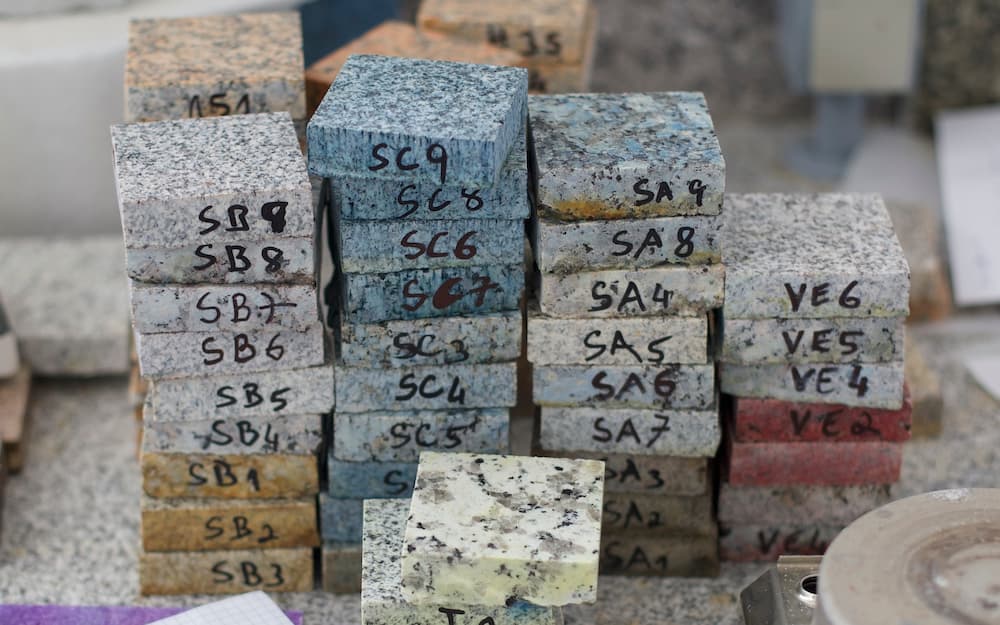
This variability is part of the nature of the material, but it also requires technical knowledge. Mineralogical, physical and mechanical characterisation makes it possible to better understand the properties of each stone and obtain relevant information for its selection, processing and application.
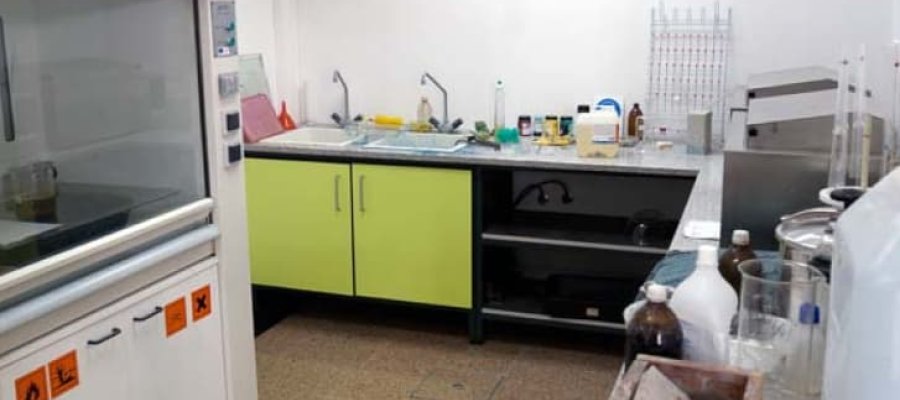
Laboratory work therefore plays an important role in characterising the raw material. Through testing and technical analysis, it is possible to gain a more accurate understanding of the material’s behaviour and assess its suitability for different conditions of use.
Performance and durability under real conditions
The choice of stone for a particular application should take into account not only its aesthetic characteristics, but also the conditions to which it will be exposed over time. Exposure to water, frost, salts, pollution, wear or temperature variations may require different responses from the material.
Research makes it possible to assess these responses by analysing parameters such as mechanical strength, water absorption, wear resistance, dimensional stability and behaviour under specific environmental conditions.
This knowledge is particularly important for façades, outdoor paving, public spaces, coastal areas or projects subject to intensive use. The more demanding the conditions of application, the greater the importance of testing and validating the expected performance of the stone in advance.
Assessing durability under different structural and environmental conditions is one of the areas of laboratory research that can reduce uncertainty in material selection and contribute to a better understanding of its performance and behaviour in use.
Processing methods and finishes
Research in the natural stone sector also extends to cutting, machining and surface treatment processes. The way stone is processed influences not only its appearance and texture, but also some of its surface characteristics and its response to conditions of use.
Processes such as polishing, honing, flaming or bush-hammering produce surfaces with different characteristics. Studying their effects makes it possible to optimise production parameters, improve the repeatability of finishes, reduce defects and more precisely control the changes introduced into the material.
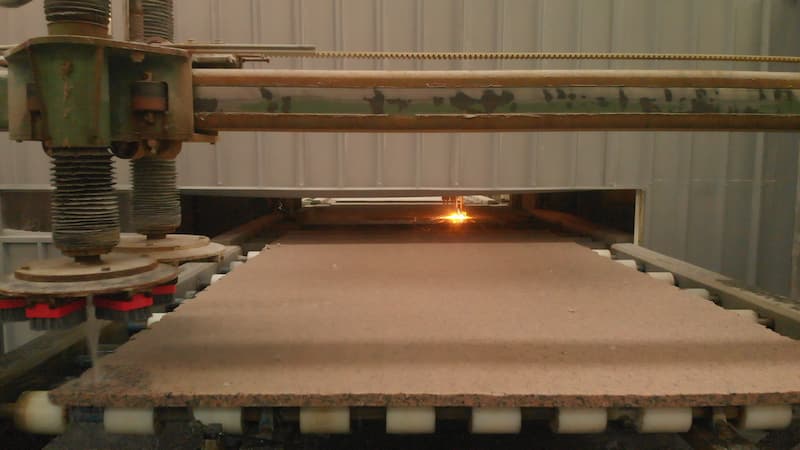
One example is the study of chromatic modification in granite through flaming. This line of research seeks to understand how thermal treatments and impregnation solutions can intensify certain natural variations in the stone without compromising colour stability over time.
This type of research makes it possible to combine the development of new aesthetic possibilities with the need to ensure the consistency and durability of the resulting solutions.
Waste recovery and circularity
The extraction and processing of natural stone generate waste whose management represents both an environmental and operational challenge. Research can help identify new ways of recovering these materials, reducing waste and promoting their reintegration into new cycles of use.
The aim is to understand under what conditions these residues can be incorporated into new products or solutions with controlled properties and practical uses.
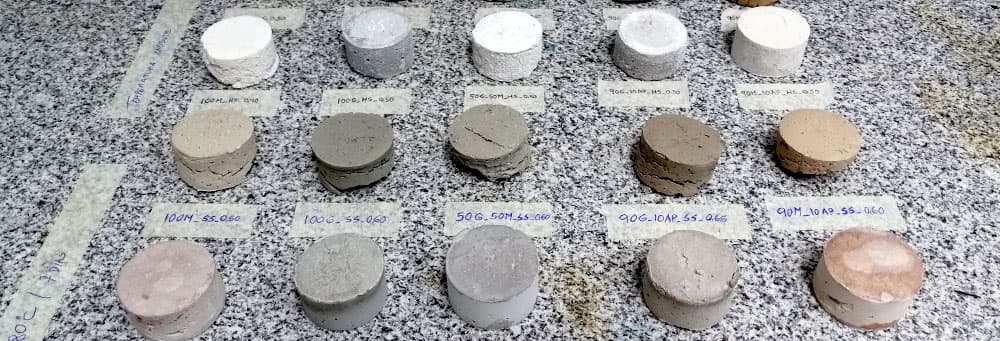
At Transgranitos, this approach is reflected in several lines of research. One of them studies the incorporation of granite and marble sawing residues into the production of geopolymers, with potential applications in construction. The work includes evaluating their physical and mechanical characteristics, strength, durability and possible applications.
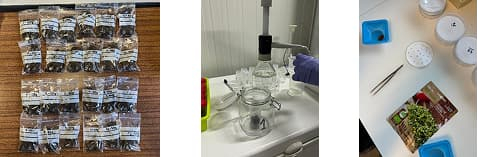
Another line of research investigates the use of sawing sludge in the development of artificial soils for the environmental and landscape restoration of degraded areas. In this case, the mineral properties of the residues, their combination with organic matter and the ability of the resulting substrate to support vegetation are studied.
These examples show that waste recovery depends on research capable of demonstrating the safety, stability, functionality and suitability of the solutions developed.
Developing new applications
Research can also contribute to expanding the possibilities for the use of natural stone by exploring properties of the material that go beyond its more conventional applications in cladding, paving, structural elements or decorative pieces.
Thermal behaviour is one such field. Different rocks have distinct characteristics in terms of heat absorption, retention and transfer, which can be studied with a view to their use in heating systems, underfloor heating or other solutions related to energy efficiency.
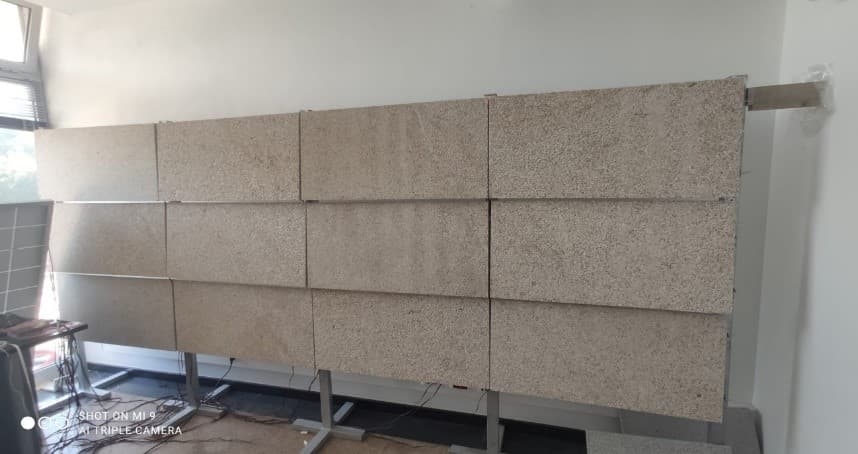
At Transgranitos, this area has been the subject of research through the development of prototypes, efficiency testing and analysis of the feasibility of using ornamental stones in thermal systems.
This type of research seeks to identify how the intrinsic properties of stone can perform new functions and lead to applications that add value to the material.
From research to industrial application
Between a research hypothesis and its industrial application, there is usually a process of characterisation, testing, comparison, prototyping and validation. Some technically promising solutions may reveal production limitations, high costs or difficulties when tested under real conditions.
For this reason, collaboration between companies, universities and research centres is particularly important. Companies contribute their knowledge of materials, production processes and challenges encountered in practice, while scientific institutions provide methodologies, laboratory capabilities and specialised knowledge.
Transgranitos has conducted research in partnership with the University of Trás-os-Montes and Alto Douro. This work has also led to the registration of two patents, one related to granite colouring and another to the development of a plant-growing substrate using production waste.
Patents are one way of materialising the results of research, but not the only one. In other cases, the knowledge developed can be progressively incorporated into the company’s processes, contributing to greater production control, better material selection, reduced waste or the improvement of products and solutions.
Better knowledge for better results
In a sector based on a natural material and a long history of industrial experience, research adds the ability to measure, test and validate. It complements accumulated knowledge with data and methods that help support decisions about materials, processes and applications.
With a material as old as natural stone, innovation does not necessarily mean breaking with what already exists. It often means understanding the material better, using resources more efficiently, improving processes and discovering new possibilities based on its own characteristics.
Learn more about our production process, our projects or our stones and their various finishes.
For quotations or further information, contact our sales team.