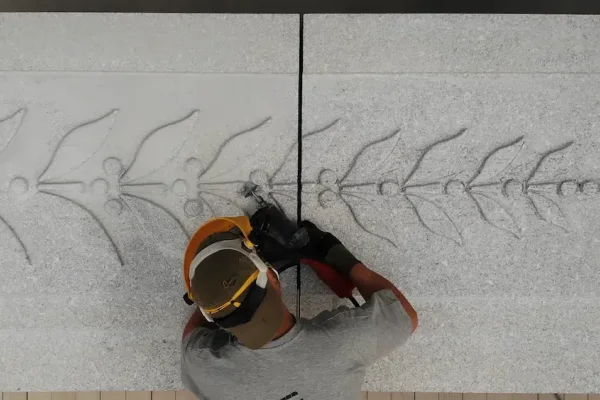
Manual finishes
In the transformation process of natural stone, some work depends on technology, scale and industrial precision. But there are also details that require a different kind of approach, where technique and precision depend on the skill and manual talent of our professionals.
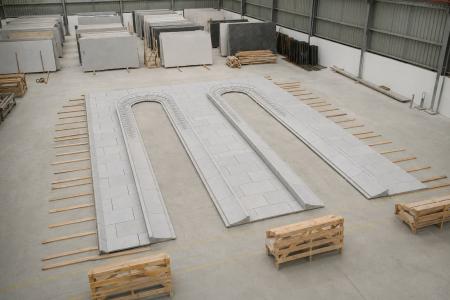
Dry Lay of Project Stones
The full-scale layout of the stone pieces on the factory floor, according to their intended position on site, makes it possible to verify the set, facilitate client validation and reinforce internal control before packaging and dispatch.
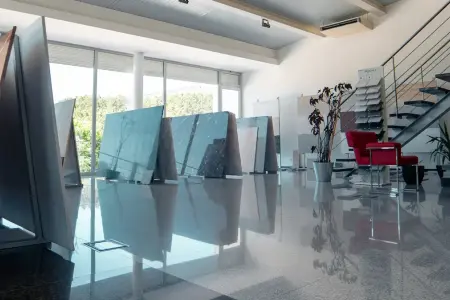
Applications of Natural Stone in Construction
While natural stone is frequently valued in construction for its aesthetic qualities, its suitability as a building material ultimately depends on its technical performance. In demanding applications, small variations in the material or in the way it is processed can have a direct impact on the final result.

Sustainability, safety and operational efficiency
Over the last few decades, the way stone is extracted and processed has evolved significantly, driven by technological development and by new requirements in terms of safety, efficiency and sustainability.
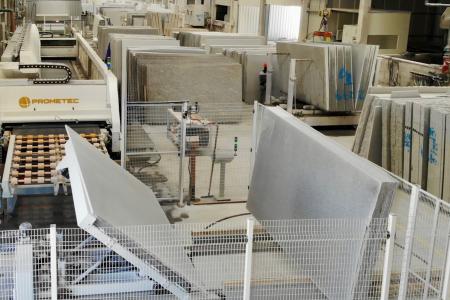
Surface Finishes
More than an aesthetic choice, surface finishing influences how natural stone interacts with light, touch, wear, and slip resistance. Different mechanical or thermal processes allow for smooth, textured, or anti-slip surfaces, adapting the stone to the technical and architectural requirements of each project.
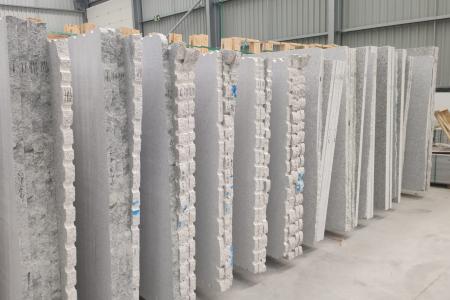
Stone slab production
More than an internal transformation process, stone slab production is a differentiating and strategic factor for intermediate producers seeking greater operational efficiency, cost predictability, and faster response to market demands.