What Is a Surface Finish?
A surface finish consists of the controlled modification of the outermost layer of the stone after cutting. This transformation may be achieved through progressively finer abrasives, mechanical brushing, thermal shock, or mechanical impact, depending on the desired result. By altering the surface micro-topography, the way the stone reflects light, feels to the touch, and performs in terms of slip resistance is modified, while the material’s structural properties remain unchanged.
Smooth Surfaces
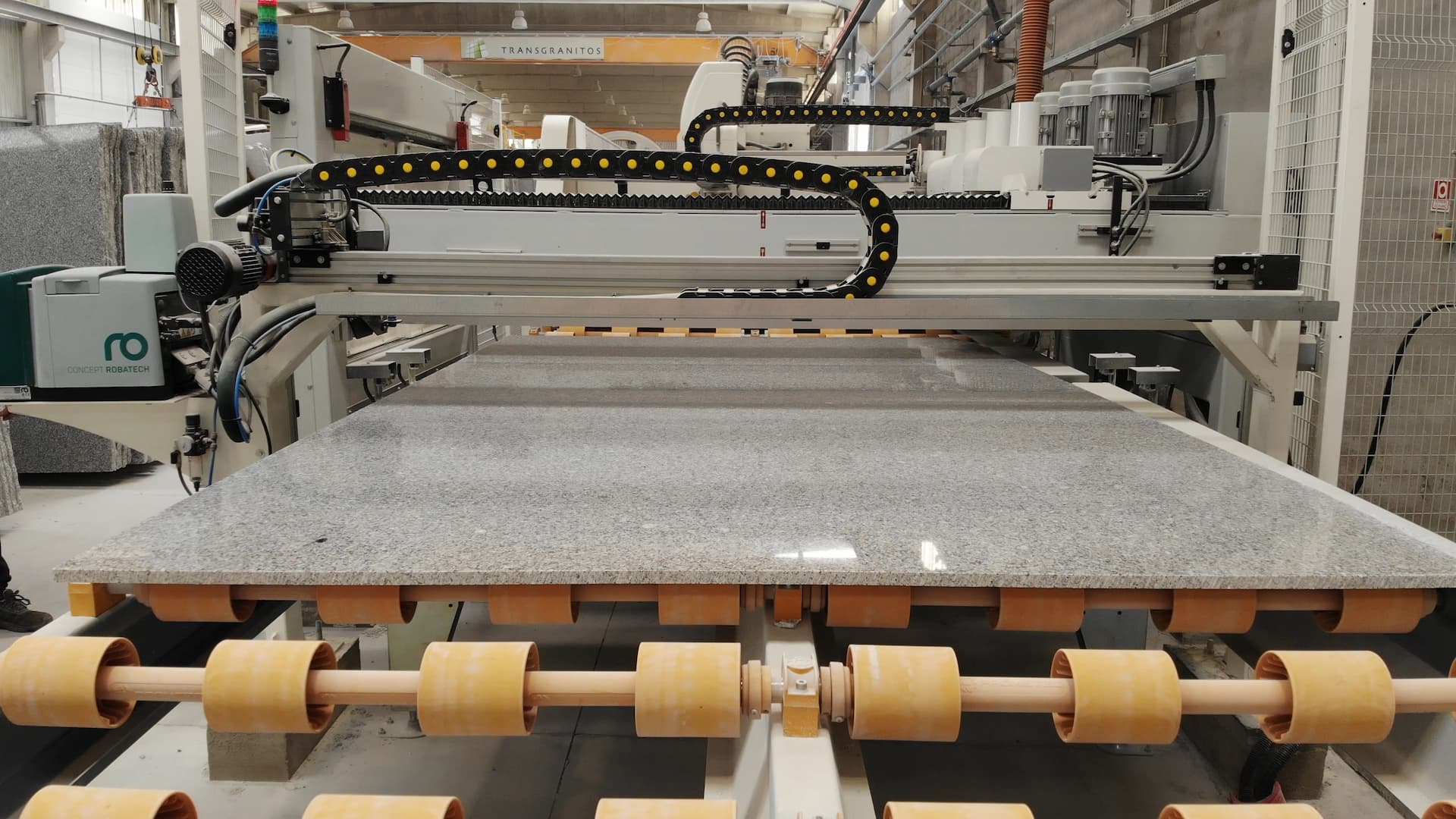
The polished finish is achieved through a sequence of progressively finer abrasives that create a highly smooth and reflective surface. This process enhances the stone’s natural color and highlights its veins and mineral variations, giving it visual depth. Due to its high reflectivity, it is frequently used in interior flooring and wall cladding, as well as in decorative surfaces and countertops where visual impact is particularly important. However, compared to textured finishes, it offers lower slip resistance.
The honed finish results from a process similar to polishing but stopped before achieving a high gloss. The outcome is a smooth, matte surface with reduced reflection and a more understated appearance. It is commonly used in interior flooring, staircases, and vertical cladding where a more restrained and contemporary look is desired, while maintaining a smooth and comfortable surface.
The leather finish is obtained through additional brushing after honing, creating a subtle micro-texture that gives the surface a more natural tactile feel. Light is diffused rather than reflected directly, and the stone takes on a more organic character. This finish is often applied in interior cladding and protected exterior areas, as well as in architectural projects that value texture without pronounced roughness.
Textured or Anti-Slip Surfaces
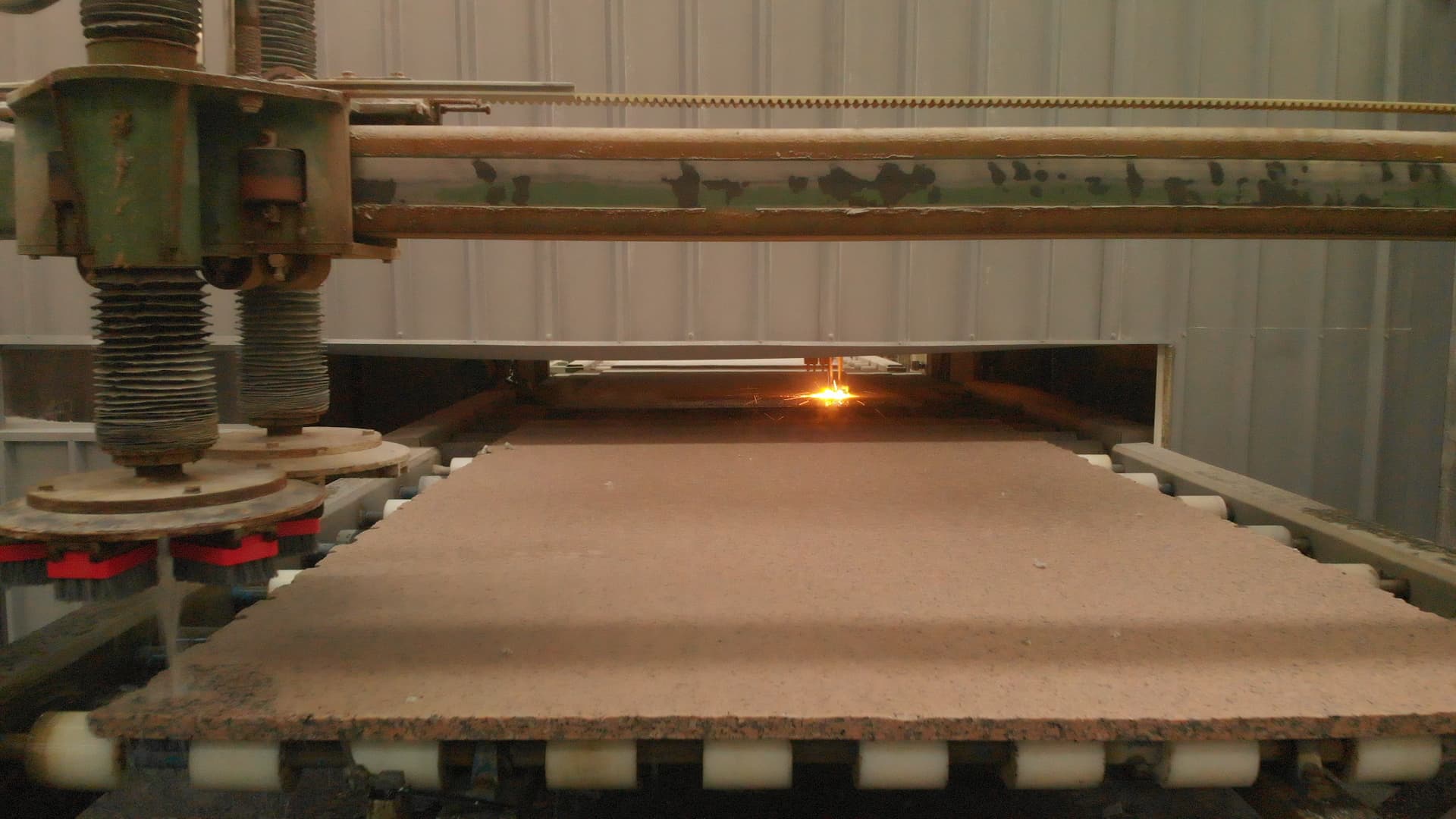
The flamed finish is produced by applying a high-temperature flame to the stone surface. The resulting thermal shock creates controlled micro-fractures in the surface crystals, generating a rough and irregular texture. This significantly increases slip resistance, reduces light reflection, and tends to slightly soften the perceived color intensity of the material. For this reason, it is frequently used in exterior paving, public areas, staircases, and spaces exposed to changing weather conditions, where safety and durability are essential.
The bush-hammered finish is created through repeated mechanical impact or abrasive blasting, producing a marked and homogeneous texture. The surface has a predominantly functional character, with regular relief and high grip. This type of finish is commonly used in urban paving, public spaces, and infrastructure subject to heavy pedestrian traffic, where visual solidity and anti-slip performance are priorities.
Technical Differences and Performance Impact
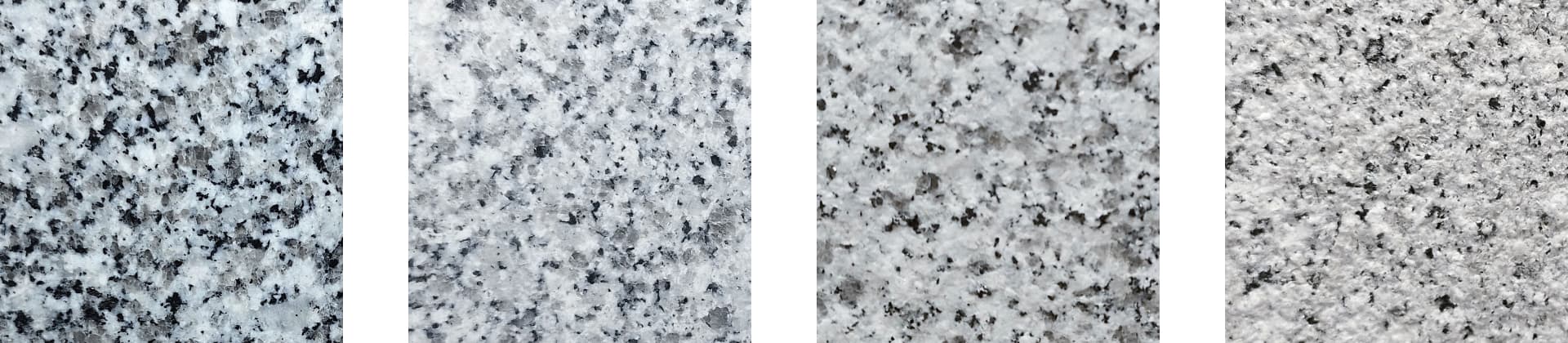 Pedras Salgadas granite in polished, honed, flamed, and shotblasted finishes
Regardless of the type of stone, finishes mainly differ in terms of surface roughness, light reflectivity, and perceived color intensity. These variations also influence how the surface behaves with regard to wear, dirt accumulation, and interaction with water. Although finishing only affects the outer layer of the stone, its functional impact can be decisive in the long-term performance of the material.
Uniformity and repeatability in the finishing process are critical to ensuring consistency between slabs and production batches, guaranteeing that the final result meets project specifications.
Surface finishing is an essential stage in the transformation of natural stone. Beyond its aesthetic dimension, it involves technical control, precision, and in-depth knowledge of industrial processes. The ability to produce different finishes consistently is part of an integrated production process, where each phase contributes to the quality, functionality, and reliability of the final material.
Learn more about our production process or explore our stones and their available finishes.
For quotations or further information, please contact our commercial team.