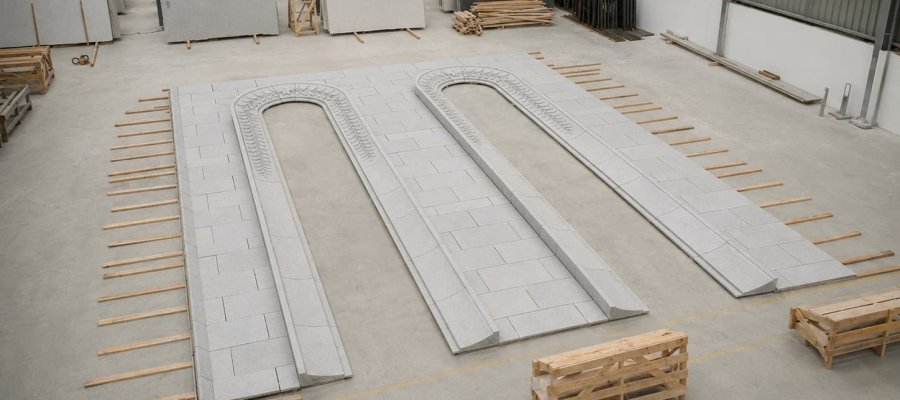
For certain projects, checking each piece individually is not enough to fully assess the set as a whole. When there is a defined position for installation on site, it becomes important to confirm, before preparation for dispatch, that the set is complete, that the planned sequence is followed and that the visual reading corresponds to the defined work.
This step is particularly important in projects where natural stone has a continuous presence, such as facades, pavements or larger-scale cladding. In these cases, the result does not depend only on the quality of each individual element, but also on the way the set is organised, interpreted and validated.
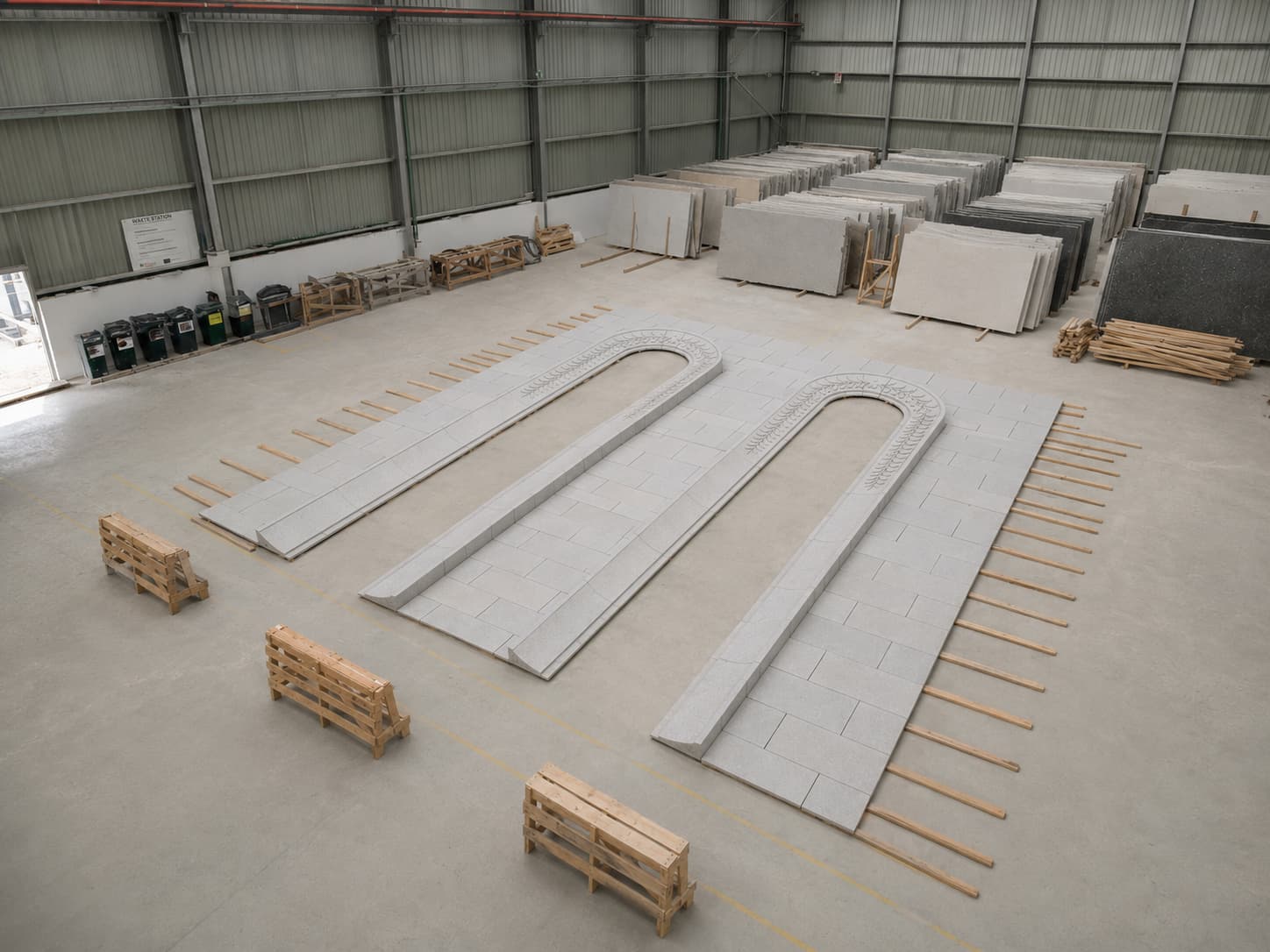
It is in this context that Dry Lay adds value to the process. By allowing the stone elements to be laid out on the factory floor, according to their intended position on site, this step enables the set to be analysed, validated by the client and internally checked before the next stage.
Quality and control
Depending on the scale of the project, this step may involve a large number of pieces, requiring the physical and operational conditions needed to lay out, identify and organise each element according to the planned sequence.
In this way, it becomes possible to analyse the relationship between pieces, verify visual continuity, confirm the planned sequence and flag any aspects that may need to be reviewed. It also provides a basis for client validation, allowing the work produced to be observed before it is sent to site.
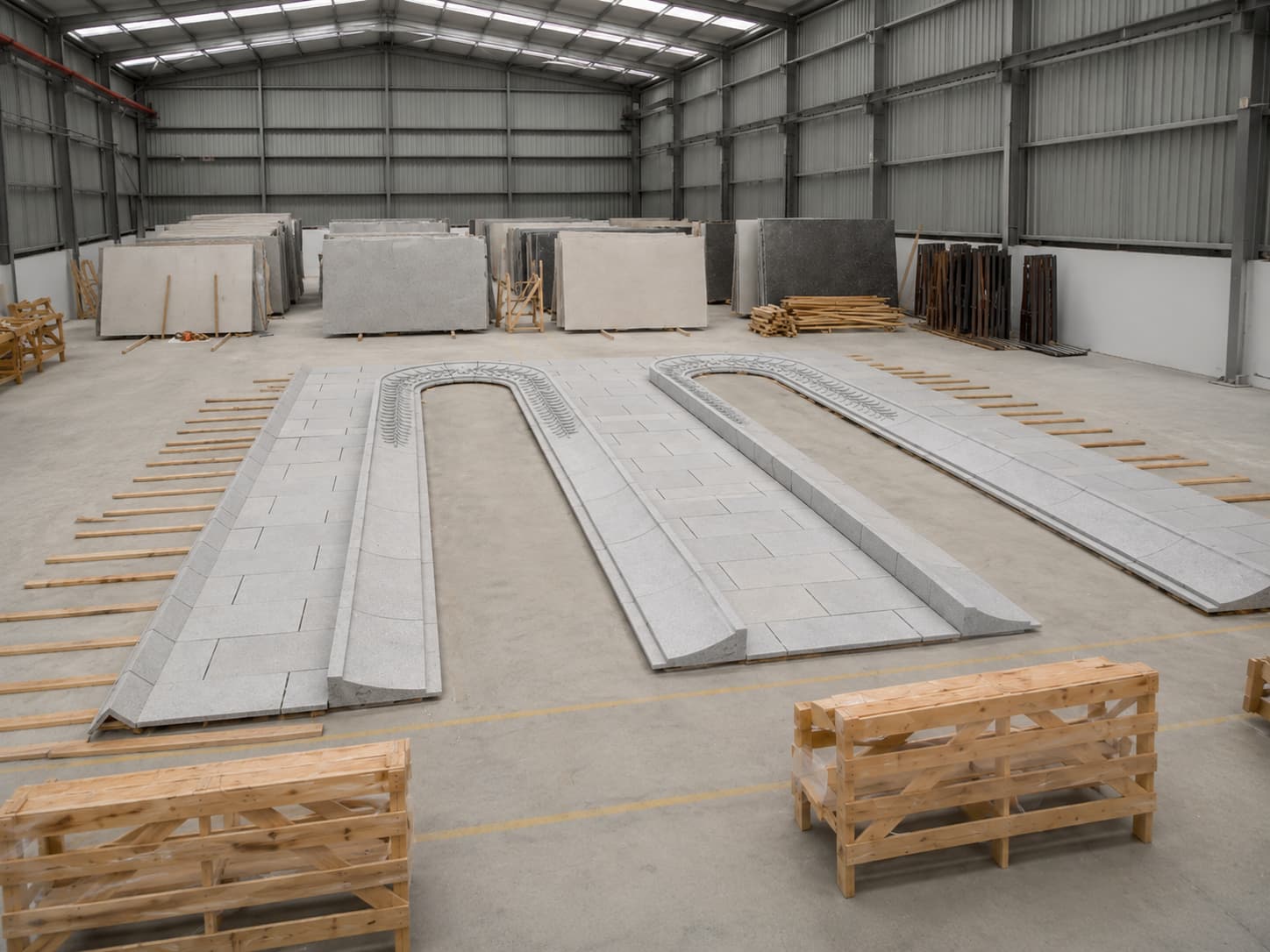
After validation, the pieces may be identified, numbered, grouped or photographically recorded, according to the project requirements. This organisation helps maintain the correspondence between the validated layout and the preparation for transport, making it easier to locate each piece on site according to the planned installation sequence.
When should it be used?
Dry Lay is not a necessary step in every project. Its use makes sense in specific projects, when the scale, complexity or client requirements justify an additional validation stage before dispatch.
Facades, pavements, larger-scale cladding or sets of cut-to-size pieces are examples where the installation sequence and the overall visual reading may be particularly important. In these cases, the prior observation of the set contributes to a more complete analysis and to a more rigorous preparation of the work produced.
At Transgranitos, this capability is part of an approach based on internal control and technical follow-up for demanding projects, allowing the material to be prepared for delivery duly verified, organised and ready for reception and installation on site.
Learn more about our production process, our projects or our stones and their different finishes.
For quotations or further information, please contact our commercial team.