Facades, flooring and interior elements involve different conditions of use, requiring informed decisions in the choice of stone and in its preparation. The long-term performance of stone depends not only on the type of material selected, but also on how it is processed and prepared according to the requirements of each application, with a direct impact on its durability, safety and consistency over time.
Building facades
The use of stone on facades permanently exposes the material to temperature variations, humidity cycles, UV radiation and, in certain regions, freeze-thaw cycles.
In this context, the physical and mechanical characteristics of the stone, as well as the type of finish, are decisive for its behaviour over time, particularly in terms of water absorption, dimensional stability and resistance to thermal variations.
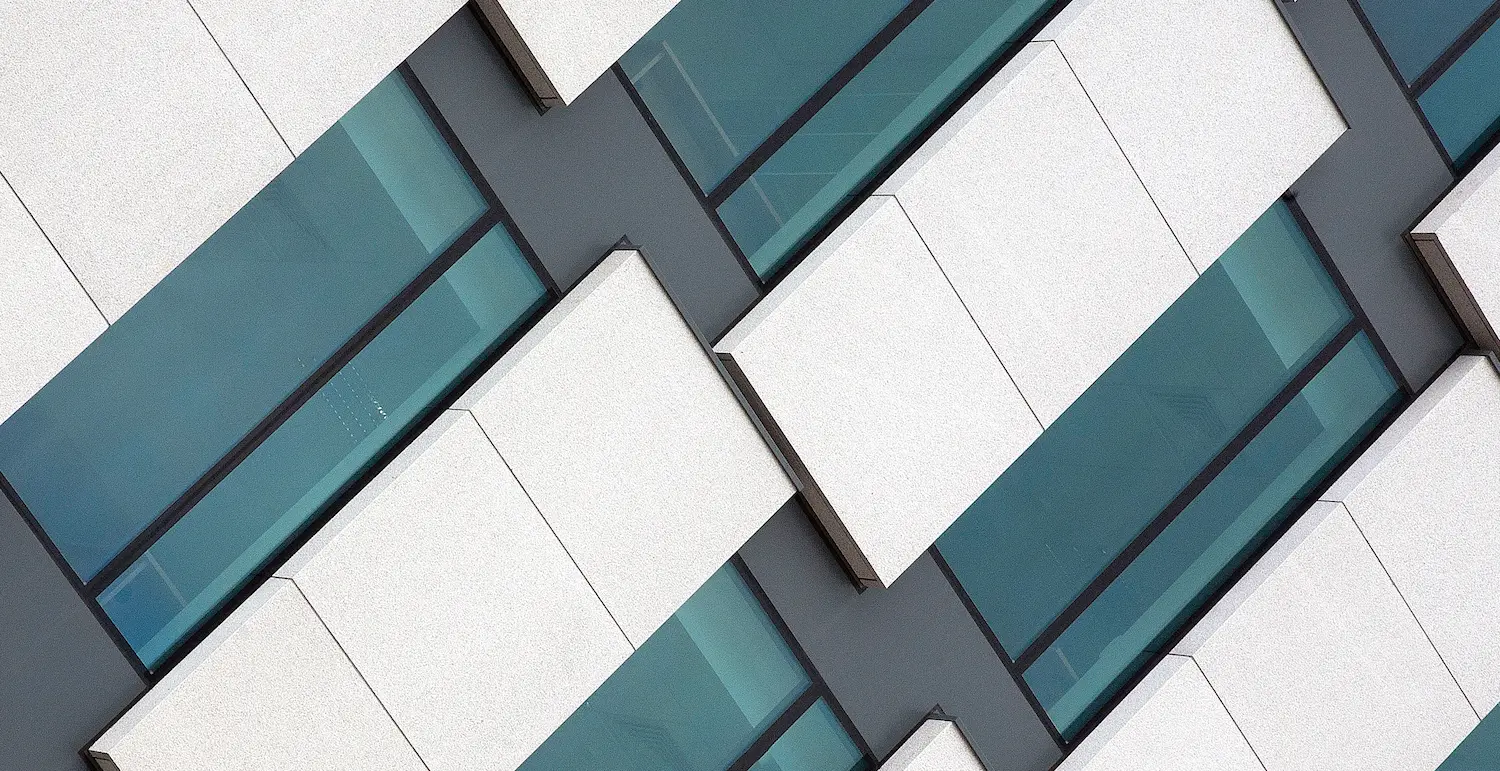 Photo of the facade of the Bio-science Trinity College, Dublin
The way stone is integrated into the facade system also depends on the quality and regularity of the supplied pieces, namely in terms of dimensions, squareness and tolerances.
In applications of this nature, dimensional consistency and cutting precision are critical factors, enabling more predictable installation on site and contributing to the performance and durability of the system.
Flooring
Flooring is one of the applications where the relationship between the type of stone, the finish and the context of use becomes particularly important.
In interior spaces, smooth finishes respond well to the aesthetic and functional requirements of everyday use. In exterior areas or spaces with heavy traffic, priority shifts towards grip and wear resistance, naturally leading to finishes with greater roughness and anti-slip performance.
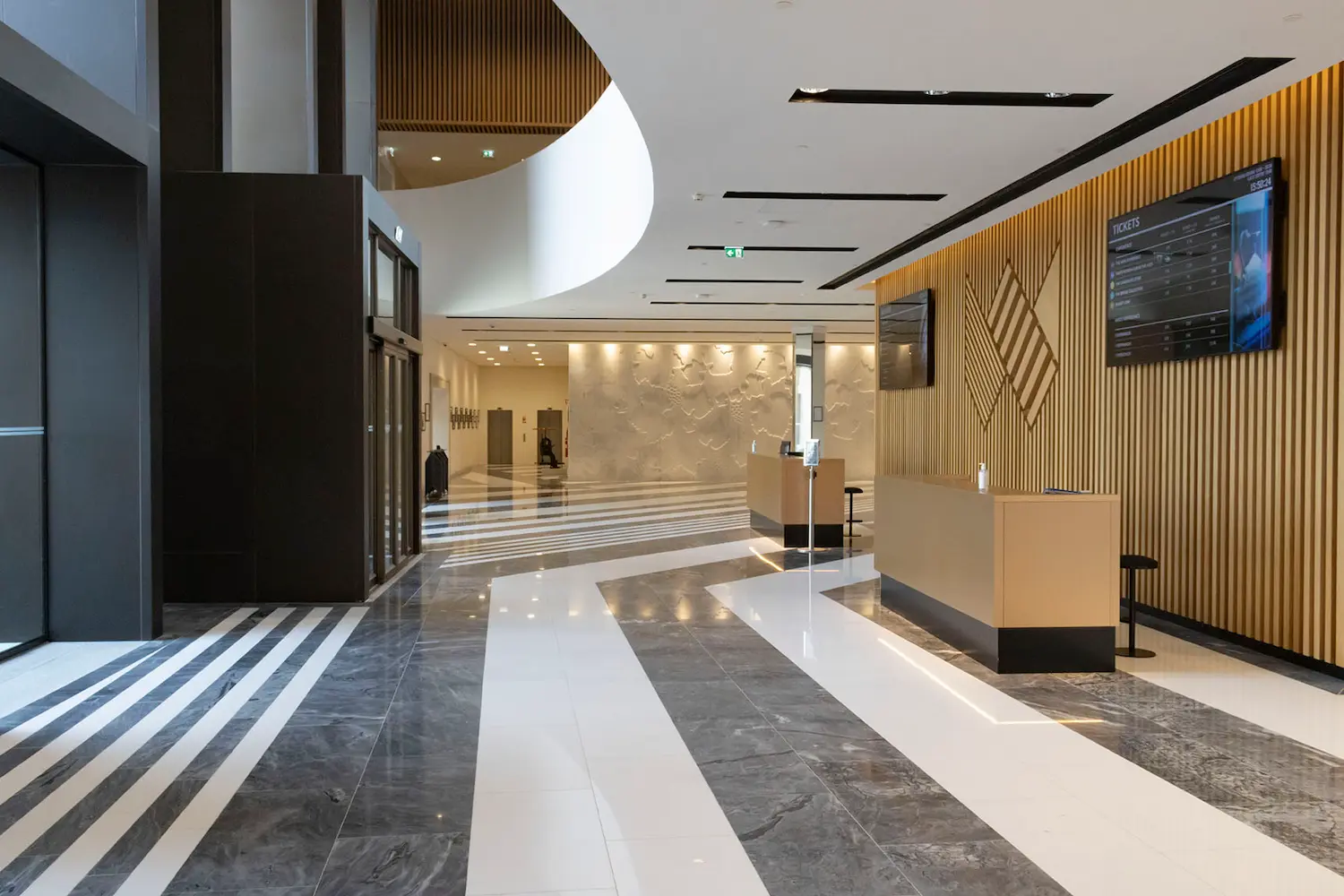 Interior flooring of the World of Wine, Vila Nova de Gaia
The physical characteristics of the stone, particularly hardness and abrasion resistance, are also decisive, especially in flooring subject to heavy loads or intense pedestrian traffic. Due to its mechanical properties, granite is the most commonly used material in these conditions.
In flooring, small variations between pieces can become evident across large areas, making dimensional consistency and uniformity of finish critical throughout the entire supply, particularly in larger projects.
Staircases
In many projects, a staircase is an element with a dual requirement, both functional and architectural, concentrating a high level of use and mechanical demand within a limited area.
The edge of the step is subject to the greatest mechanical stresses, such as impact, abrasion and bending forces, making it the most critical point for the durability of the whole assembly.
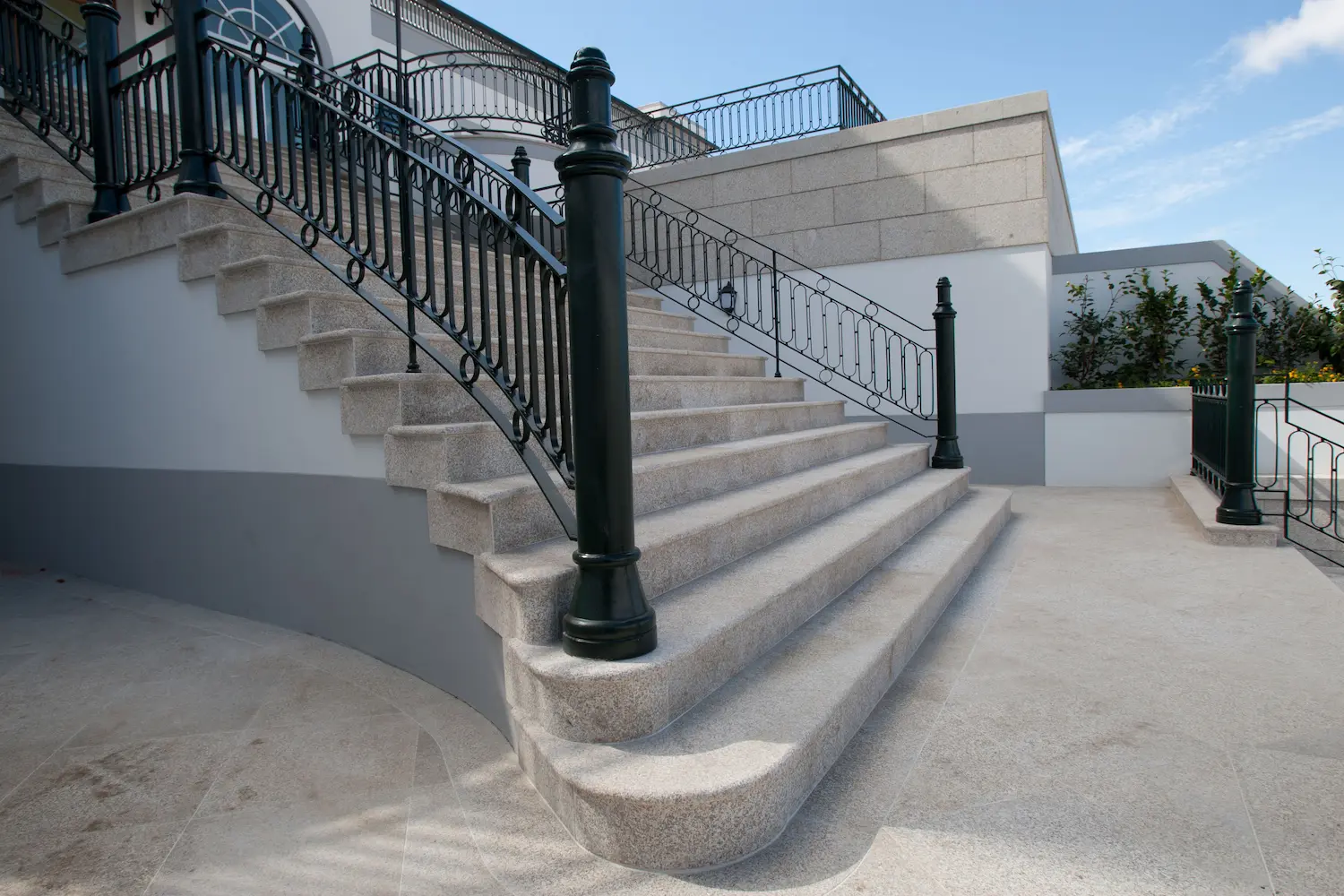 Staircase at the Yeatman Hotel, Vila Nova de Gaia
The stone must provide good resistance to impact and bending, especially in larger pieces. Due to its hardness and wear resistance, granite is a common choice for this type of application.
The tread surface requires a finish with adequate grip under all conditions of use, and it is important to ensure uniform treatment across all pieces.
Dimensional precision and squareness are also decisive. Small accumulated variations can compromise the alignment between steps and the overall behaviour of the staircase, reinforcing the importance of consistency in the processing stage.
Thresholds and window sills
Thresholds and window sills are elements that are particularly exposed to water and thermal variations, playing a critical role in protecting the building envelope.
The choice of stone should favour materials with low porosity and good resistance to weather variations. Due to its durability in exterior exposure conditions, granite is the most common option.
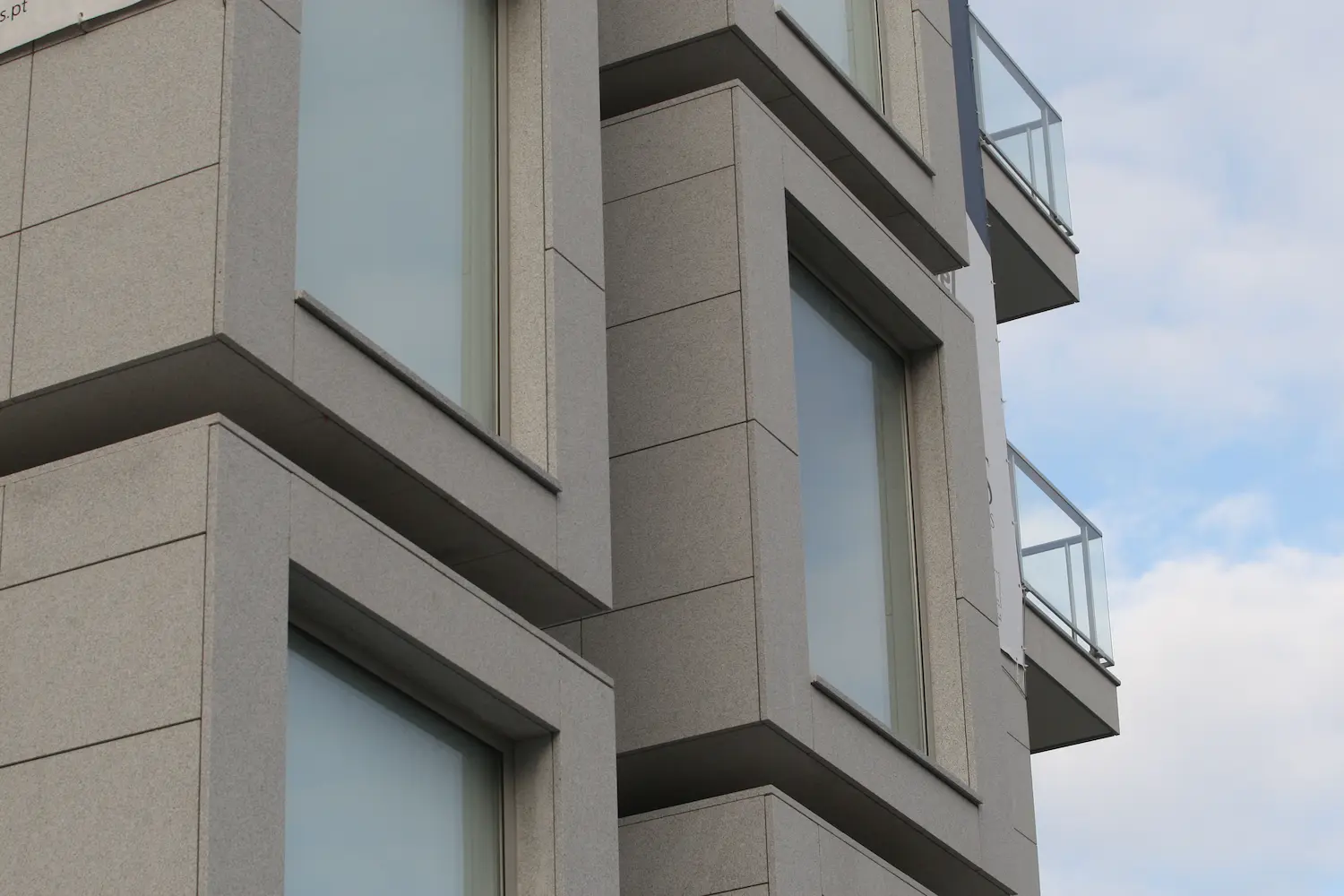
The definition of adequate slopes and the incorporation of drip grooves are decisive details for the correct drainage of water, with a direct impact on the durability of the application and the protection of the facade.
The consistent execution of these elements depends directly on the precision of the cutting and finishing of the pieces. Small variations in slopes, edges or drainage details can compromise their performance over time, reinforcing the importance of control during the processing stage.
Kitchen and bathroom countertops
Natural stone countertops are used on intensive-use surfaces in direct contact with the user, both in kitchens and bathrooms, requiring a combination of resistance, functionality and finishing quality.
In kitchens, stone is exposed to various agents, from stains to localised thermal variations, which requires materials with low porosity and easy maintenance. In bathrooms, exposure to humidity is constant, making it equally important to ensure stability and consistent behaviour over time.
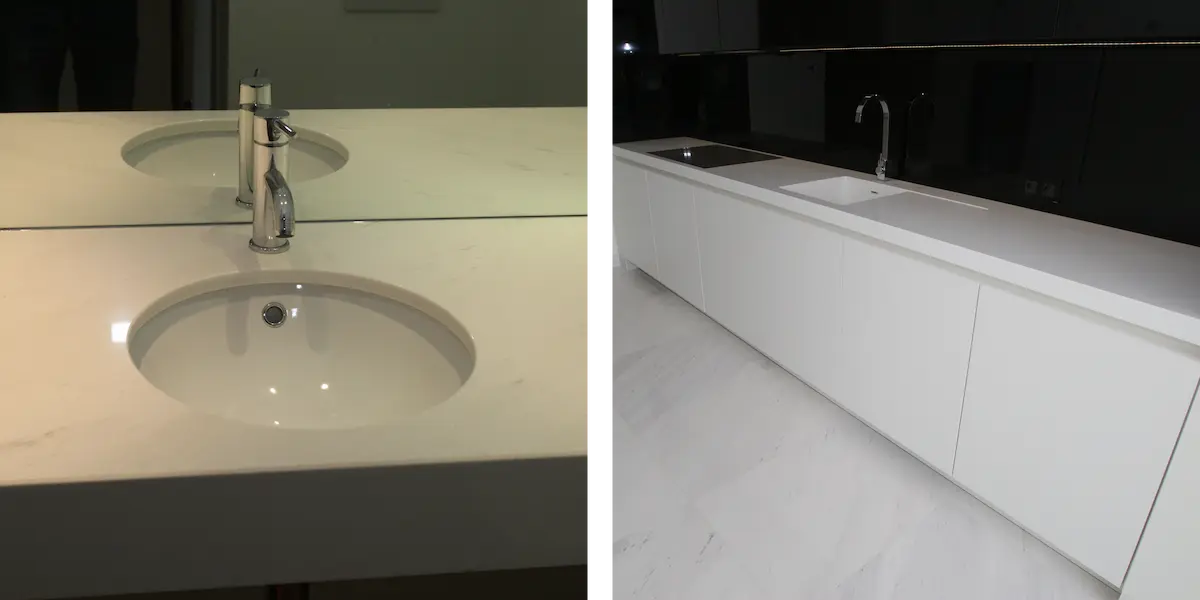
The choice of finish should be made according to the context of use, favouring surfaces that facilitate maintenance and, when necessary, provide adequate levels of grip.
Areas such as cut-outs for sinks or taps, fittings and edges are more sensitive and require high manufacturing precision. The quality of cutting and finishing at these points is decisive not only from an aesthetic point of view, but also to ensure the strength and durability of the piece over time.
Stone slabs
Stone slabs are the basis of most natural stone applications, serving as the starting point for processing and adapting the material to each project.
The quality of the slab depends directly on the selection of the block and the cutting process, and is decisive for the visual and structural consistency of the material throughout the supply.
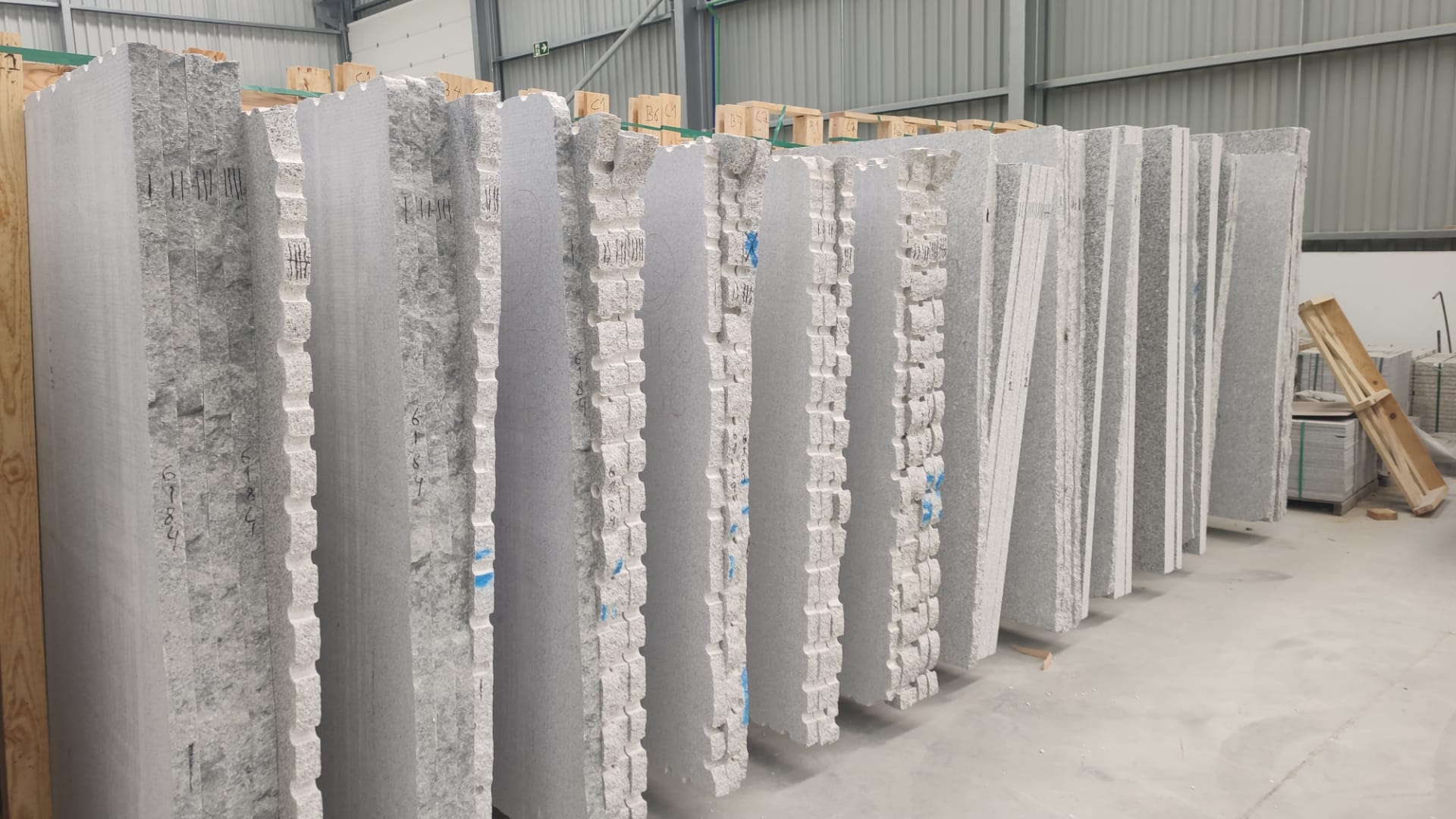 See also our article on stone slab production
The thickness, type of finish and flatness of the slabs directly influence their behaviour in different applications, requiring a high level of precision and control during processing.
It is from the slab that bespoke solutions become possible and continuity between pieces is ensured, with material consistency and process control being critical factors in meeting the demands of larger projects.
Natural stone adapts to a wide range of applications in construction, from elements exposed to demanding environmental conditions to interior surfaces subject to intensive use.
Its performance does not depend only on the type of material selected, but on how it is processed to meet the requirements of each application, with consistency between pieces and throughout the supply being a determining factor.
It is this control that makes it possible to ensure durable, stable solutions with long-lasting visual quality.
Learn more about our production process, our projects or our stones and their different finishes.
For quotations or further information, please contact our commercial team.