Figure 1. Sludge generated during natural stone cutting:
a) Stone cutting machine;
b) Appearance of wet sludge;
c) Oven-drying of the sludge;
d) Dried sludge (powder).
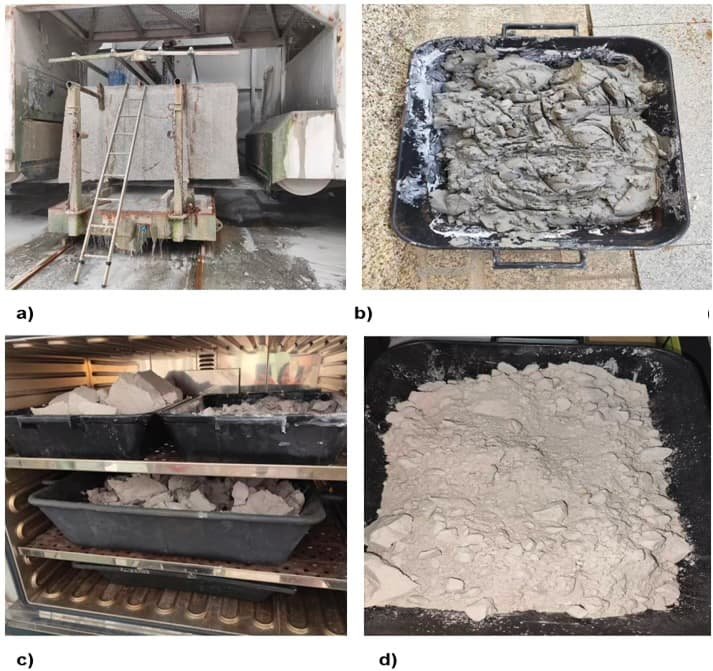
This project investigates how the sludge generated during natural stone cutting (Figure 1) can be combined with organic waste, such as bark, fibers, and plant residues, to create a sustainable and durable material known as a geopolymer. As an alternative to conventional cement-based materials, geopolymers offer potential for a wide range of applications, including construction.
Figure 1. Sludge generated during natural stone cutting:
a) Stone cutting machine;
b) Appearance of wet sludge;
c) Oven-drying of the sludge;
d) Dried sludge (powder).
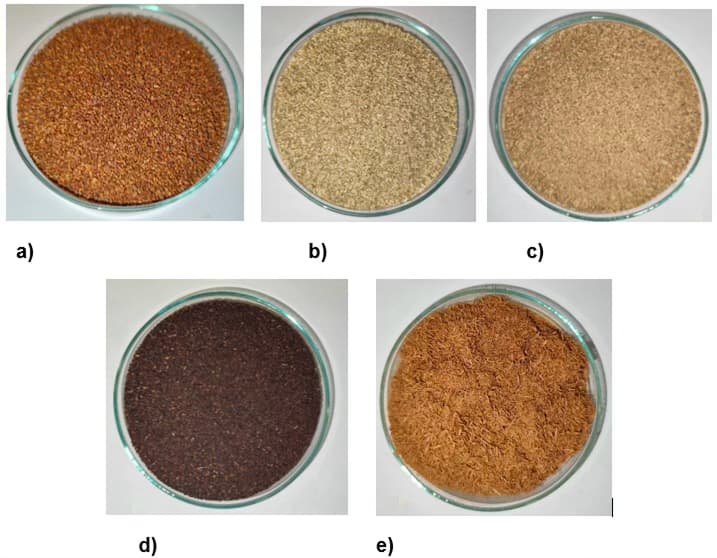
Five different types of organic waste were tested (Figure 2) to identify which would provide the greatest mechanical strength to the final material.
Figure 2. Organic waste materials tested:
a) Almond shells;
b) Reed;
c) Acacia;
d) Grape pomace;
e) Eucalyptus bark.
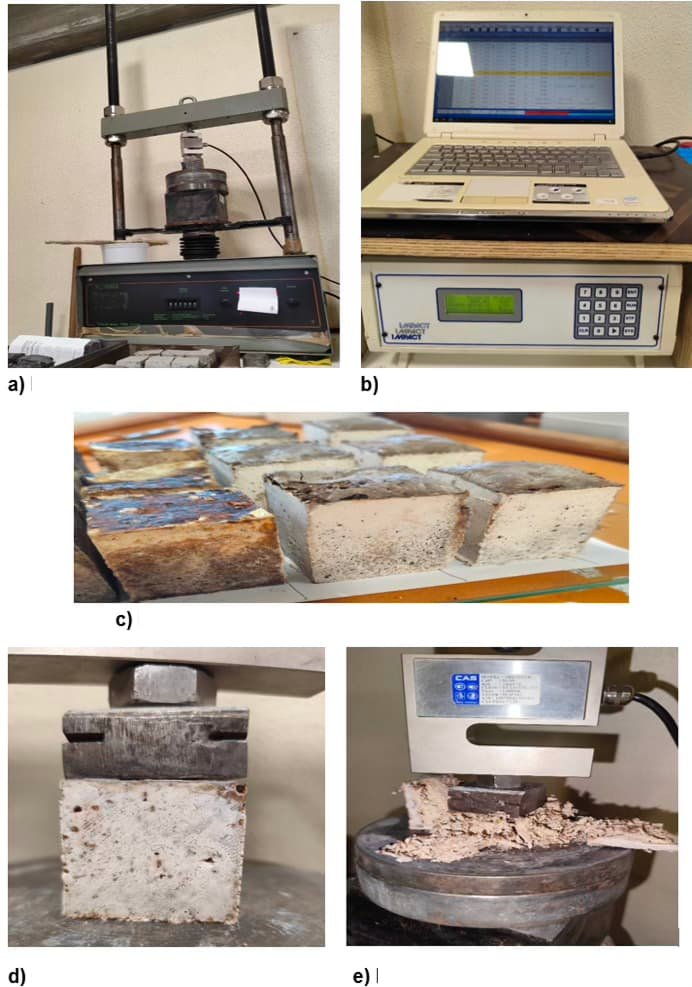
Among these materials, shredded acacia (Figure 3) clearly stood out as the best option, achieving nearly twice the compressive strength (Figure 4) of the second-best performing material.
Figure 3. Best-performing waste material and the shredder used:
a) Collected acacia bark;
b) Prepared for drying and subsequent shredding;
c) Shredder used to process the waste materials.
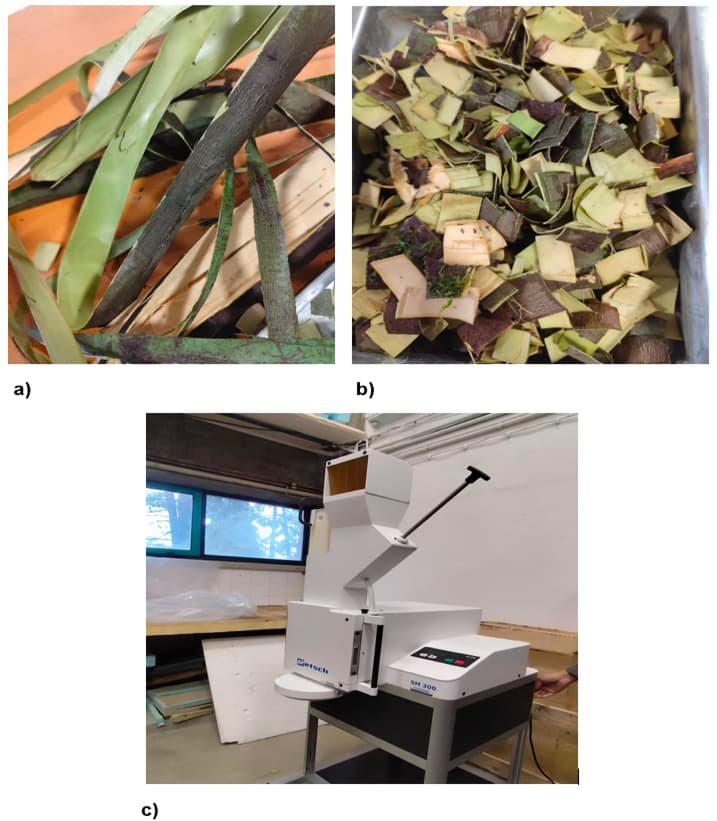
Figure 4. Axial compression testing of geopolymer samples:
a) Testing equipment (Triaxial Tester T400);
b) Real-time data recording;
c) Sample molded using different formulations;
d) Placement of the specimen in the testing press;
e) Sample after failure.
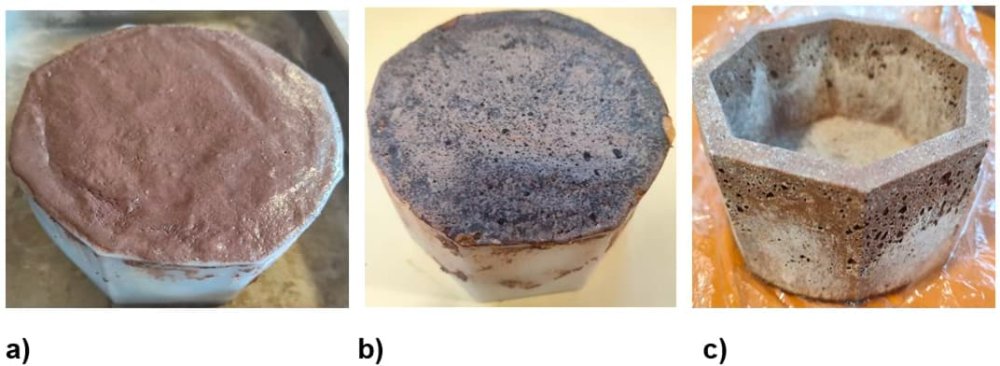
Using this formulation, an initial practical prototype has already been developed (Figure 5): a porous, eco-friendly plant pot designed to be biodegradable and planted directly into the soil along with the plant. This demonstrates one of the potential applications of the new material and highlights how industrial waste can be transformed into a useful and sustainable solution.
Figure 5. Prototype of the eco-friendly plant pot developed using the selected formulation:
a) Pouring the mixture into the mold;
b) Prototype after curing;
c) Finished pot with a porous texture.
The next steps of the project include optimizing the material's porosity to improve its performance in this application without compromising the mechanical strength already achieved, as well as exploring other potential uses for the geopolymer in construction.
Subscribe our newsletter